

An environmental search is a report ordered during the conveyancing process that tells you whether the property you are buying carries hidden environmental risks — chiefly contaminated land, flood risk and ground instability, along with things like landfill, radon gas and nearby energy infrastructure. It does not stop a purchase; it gives you the information to decide whether to proceed, renegotiate, or protect yourself before you are legally committed. Because some of these risks — especially contaminated land — can make a buyer legally responsible for expensive clean-up, the environmental search is one of the most important checks in any property purchase, and most mortgage lenders insist on it. This guide explains exactly what it covers, what a “passed” or “failed” result means, what to do if there is a problem, and how much it costs.
- An environmental search screens for contaminated land, flooding, ground stability, landfill, radon and energy infrastructure.
- It is ordered by your conveyancer during the buying process and most lenders require it.
- It is cheap — typically £30–£60 — relative to the risks it uncovers.
- Under the “polluter pays” rules, a buyer can become legally liable to clean up contaminated land, so this is not a box-ticking exercise.
- A “further action” (failed) result is not the end — options include a detailed report, environmental insurance, renegotiation, or walking away.
- Buying a property? See our property advisory service, read our freehold vs leasehold guide, or speak to Hayhills.
- What an environmental search is
- What it covers
- Why it matters
- When it is done and who orders it
- How much it costs
- Reading the result
- What to do if it fails
- Contaminated land
- Flood risk
- Ground stability and subsidence
- Radon gas
- Vs other searches
- Mortgages and insurance
- Buyer checklist
- Do you really need one?
- Common mistakes
- What we see in practice
- How Hayhills can help
- FAQs

What an environmental search is
An environmental search (sometimes called an environmental report or Con29M-style search) is a desktop report compiled from a range of official and commercial datasets — the Environment Agency, British Geological Survey, local authority records, historical maps and more. Your conveyancer orders it as one of the standard property searches, alongside the local authority search and the water and drainage search. It cross-references the property’s exact location against records of past and present land uses and natural hazards, and returns a risk assessment. The point is to surface, before you exchange contracts, anything about the land itself that could cost you money, affect your mortgage or insurance, or create a legal liability — things you cannot see on a viewing and the seller may not know about.
What an environmental search covers
A typical environmental search reviews several categories of risk:
| Risk | What it checks |
|---|---|
| Contaminated land | Past industrial or polluting uses on or near the site that could have left contamination |
| Flood risk | River, surface water (pluvial), coastal and groundwater flooding probability |
| Ground stability | Subsidence, shrink-swell clay, historic mining, landslip and sinkhole potential |
| Landfill and waste | Current and former landfill sites and waste facilities nearby |
| Radon | Whether the property is in a radon-affected area |
| Energy and infrastructure | Nearby power lines, substations, wind or solar projects, and planning |
Not every search covers every category to the same depth, and more detailed “all-in-one” reports are available where a basic search flags a concern.
Why an environmental search matters
The headline reason is legal liability. Under the contaminated land regime (Part 2A of the Environmental Protection Act 1990), the cost of cleaning up contaminated land follows a “polluter pays” principle — but if the original polluter cannot be found, liability can fall on the current owner or occupier. In other words, buy a property built on a former petrol station, factory or tip without checking, and you could one day be served with a remediation notice running to tens or even hundreds of thousands of pounds. Beyond contamination, an undisclosed flood risk can make a property difficult or expensive to insure and harder to resell, and ground instability can mean structural problems down the line. Mortgage lenders know all this, which is why they generally require an environmental search before releasing funds. For a £30–£60 report, it is the cheapest insurance against some of the most expensive surprises in property.
When it is done and who orders it
The environmental search is ordered by your conveyancer after your offer is accepted, as part of the bundle of pre-contract searches. You do not arrange it yourself; it forms part of the legal due diligence your solicitor or licensed conveyancer carries out before you exchange contracts. The results come back within a few days and are reviewed alongside the local authority and drainage searches. If anything of concern appears, your conveyancer will raise it with you and advise on next steps before you are committed. Because conveyancing is a regulated activity, this work is carried out by a regulated professional — Hayhills advises on the commercial picture and works alongside the conveyancer handling the transaction.
How much an environmental search costs
A standard environmental search is one of the cheaper elements of a property purchase, usually in the region of £30 to £60, included within your conveyancer’s disbursements. More comprehensive combined reports — which bundle contamination, flood, ground stability, energy and planning into a single detailed assessment — cost more, often £60 to £120, and a specialist follow-up report (for example, a detailed flood risk assessment or a Phase 1 contamination study) costs more again if the initial search flags a problem. Set against the potential cost of inheriting a contaminated-land liability or an uninsurable flood risk, the basic search is inexpensive and rarely worth skipping.
Reading the result: passed vs further action
Environmental searches usually return a clear overall verdict, often expressed as “passed” or “further action required” (sometimes shown as a green or red result). A “passed” result means the data reviewed did not identify a significant concern — reassuring, though never a cast-iron guarantee. A “further action” or “failed” result does not mean the property is unsafe or unsellable; it means the data flagged something — perhaps a former industrial use nearby, or a flood-risk indicator — that warrants a closer look before you commit. It is a prompt to investigate, not a verdict to abandon the purchase. The worst response is to ignore a red result; the right response is to find out exactly what triggered it and how serious it is.
What to do if the search “fails”
If your environmental search comes back with a concern, you have several options, and your conveyancer will advise which fits:
- Order a detailed report. A specialist follow-up (e.g. a full contamination or flood assessment) clarifies the real level of risk.
- Take environmental insurance. A relatively inexpensive policy can cover the risk of future contaminated-land liability, often satisfying lenders.
- Renegotiate. A genuine risk can justify a price reduction or a retention to cover remediation.
- Seek seller information. The seller may hold reports or know the history that explains the flag.
- Walk away. If the risk is serious and cannot be managed, it is far better to discover it now than after completion.
Most flagged results are resolved with a detailed report or a modest insurance policy rather than a collapsed sale — but you only get those options if you act on the result rather than ignoring it.
Contaminated land explained
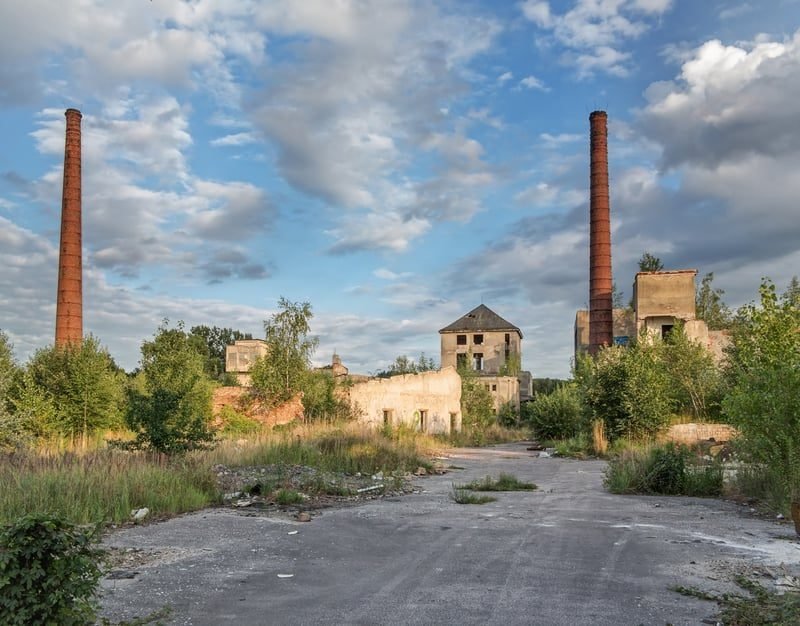
Contaminated land is the risk that worries lawyers most, because of where the liability can land. The contaminated land regime works on a “polluter pays” basis: the person who caused the contamination is first in line to pay for remediation. But if that original polluter has disappeared — a company long since dissolved, for example — liability can shift to the current owner or occupier of the land. That is why buying without checking the site’s history is a real gamble: a property on or near former industrial land, a petrol station, a gasworks, a tannery or a landfill may carry contamination that becomes your legal problem. The environmental search is the first screen for this; where it flags a concern, a detailed assessment or environmental insurance is the usual answer.

Flood risk
Flood risk has become one of the most important parts of an environmental search as the climate changes and flooding becomes more frequent. Searches typically assess several types: river (fluvial) flooding, surface water (pluvial) flooding from heavy rain, coastal flooding, and groundwater flooding. A property in a flood-risk area can be harder and more expensive to insure and to resell, even if it has never actually flooded. The good news is that the Flood Re scheme helps make home insurance available for many at-risk residential properties, and a detailed flood report can clarify the true risk for a specific address. For any property near a river, the coast, or low-lying ground, the flood result is worth particular attention.

Ground stability and subsidence
Ground stability covers the risk that the land beneath a property moves. The most common cause in much of England is shrink-swell clay, which expands when wet and shrinks when dry, causing subsidence and cracking — a risk that hotter, drier summers are making worse. Other causes include historic mining (coal, tin, chalk and other minerals), landslip on sloping ground, and natural sinkholes in areas of soluble rock. Subsidence can mean structural repairs, insurance complications and difficulty selling. The environmental search flags whether a property sits in a higher-risk area, prompting a closer look — for example a structural survey or a mining report — where appropriate.
Radon gas
Radon is a naturally occurring radioactive gas that seeps from the ground in certain geological areas and can accumulate in buildings, where prolonged exposure is a recognised health risk. The environmental search indicates whether a property lies within a radon-affected area. If it does, the answer is usually straightforward and inexpensive: a radon test measures the actual level, and where needed, simple mitigation (such as a sump and fan, or improved underfloor ventilation) reduces it. Radon is rarely a deal-breaker, but it is something a buyer should know about and address rather than discover later.
Environmental search vs the other property searches
The environmental search is one of a small bundle of searches your conveyancer runs, and it helps to see how they fit together. The local authority search reveals planning history, building regulations, road schemes and whether the property is listed or in a conservation area. The drainage and water search confirms how the property connects to mains water and sewerage and whether public drains run nearby. A chancel repair check covers a historic liability to contribute to church repairs in some areas, and in former mining regions a separate coal or mining search is added. The environmental search is the one focused specifically on land condition and natural hazards — contamination, flooding and ground stability. Together these searches build a picture of the legal, physical and environmental realities of the property that no viewing or survey alone can provide.

How environmental risk affects mortgages and insurance
Environmental issues do not just create clean-up liabilities; they ripple into financing and insurance. Mortgages: lenders are cautious about contaminated land and serious flood risk, and a poor environmental result can lead a lender to ask for a detailed report, require environmental insurance, lend less, or in rare cases decline — which is exactly why they require the search in the first place. Insurance: a property in a flood-risk area can face higher premiums, large excesses, or difficulty obtaining cover at all, though the Flood Re scheme helps many at-risk homes; subsidence history similarly affects buildings insurance. Resale: whatever affects your ability to finance and insure a property will affect the next buyer too, and therefore its value. Understanding the environmental position early lets you address these knock-on effects — often with a modest insurance policy — before they become obstacles at exchange or, worse, when you come to sell.
A buyer’s environmental checklist
To make the most of the environmental search, a buyer should:
- Confirm the search is being done. Check your conveyancer has ordered it as part of the search pack.
- Read the overall result and ask your conveyancer to explain anything flagged as “further action”.
- Check flood risk specifically if the property is near water or low-lying ground.
- Ask about site history for any property on or near former industrial, fuel or landfill land.
- Get a detailed report or insurance where a concern is flagged, rather than ignoring it.
- Factor results into your offer — a genuine risk can justify renegotiation.
- Keep the report. You will want it when you come to sell, and it informs future decisions.
A few minutes spent understanding the result is the difference between buying with confidence and inheriting someone else’s problem.
Do you really need an environmental search?
If you are buying with a mortgage, the practical answer is that you have little choice — most lenders require an environmental search before releasing funds. But even cash buyers, who are not obliged to have one, should: paying outright does not protect you from inheriting a contaminated-land liability or buying into an uninsurable flood risk. The search is cheap, quick and ordered as a matter of routine by any competent conveyancer. The only real question is whether to upgrade to a more detailed combined report, which is sensible for higher-value properties, brownfield or former-industrial areas, or anywhere near water. Skipping the search to save £40 is a false economy of the worst kind.
Common mistakes to avoid
- Treating it as a formality. The environmental search can reveal liabilities that dwarf every other cost in the purchase.
- Ignoring a “further action” result. A flag is a prompt to investigate, not something to wave through.
- Assuming cash buyers are safe. Liability for contaminated land does not depend on having a mortgage.
- Overlooking flood risk because it has never flooded. Insurance and resale can be affected regardless.
- Skipping the search to save money. The saving is trivial next to the risks it screens for.
- Not asking about a detailed report. For brownfield or waterside sites, the basic search may not be enough.
Worked example: the former garage site
A buyer is purchasing a modern flat in a development built a few years ago on the site of a former petrol station. The basic environmental search comes back with a “further action” result, flagging the historical fuel-storage use. Rather than panic or ignore it, the buyer’s conveyancer obtains a detailed contamination report and confirms the developer carried out remediation when the site was redeveloped — but recommends an inexpensive environmental insurance policy to cover any residual liability, which the lender accepts. The purchase completes safely. Without the search, the buyer would never have known the site’s history, and would have had no protection if a problem emerged later. This is exactly how an environmental search is meant to work: surface the risk, then manage it.
London buyers: a quick note
London is full of land with an industrial past — former factories, gasworks, railways and wharves redeveloped into homes — as well as significant areas within the Thames and tributary floodplains. That makes environmental searches especially relevant for London purchases, where brownfield history and flood risk are common. The same process applies as everywhere in England and Wales, but the chance of a flagged result is higher, so it is worth being ready to obtain a detailed report or environmental insurance, and to take advice on what a particular result really means for the property.
What we see in practice
In our property practice, an environmental search “failing” rarely means a deal is dead — it usually means the report has flagged a risk that needs a proportionate response rather than alarm. The legal test is narrower than the search result suggests: under Part 2A of the Environmental Protection Act 1990, land is only formally “contaminated” where the local authority judges that significant harm, or a significant possibility of significant harm, is being caused. Most “further action” results turn on historic land use near the property, not on the property itself.
We routinely advise buyers to read a red result alongside two questions: who would actually be liable, and whether insurance is available. On the “polluter pays” principle the original polluter (Class A) is liable for remediation first, and the current owner or occupier (Class B) only where no polluter can be found. The Law Society’s Contaminated Land Practice Note (January 2020) expects a buyer’s solicitor to consider contamination in every transaction, and in practice a modest contaminated-land insurance policy often satisfies a lender far more cheaply than further investigation.
How Hayhills can help
Conveyancing and the formal handling of property searches are regulated activities, so the search itself is carried out by a regulated conveyancer. Where Hayhills adds value is the commercial and strategic side: helping you understand what an environmental search result actually means for your purchase, weighing up whether to obtain a detailed report or environmental insurance, thinking through the impact on price, mortgage and resale, and co-ordinating with the regulated professional handling your transaction. Explore our property advisory service or speak to Hayhills today. If you are weighing up the property itself, our freehold vs leasehold guide covers the ownership side.
This article is for general information only and does not constitute legal or accountancy advice. Hayhills Limited, trading as Hayhills Legal Advisory, provides non-reserved legal advisory services. Always check current requirements at GOV.UK.
Frequently asked questions
What is an environmental search when buying a house?
It is a conveyancing report that screens a property for environmental risks such as contaminated land, flood risk, ground stability, landfill and radon, so you know about them before you commit to buy.
How much does an environmental search cost?
A standard environmental search usually costs £30 to £60. More detailed combined reports cost £60 to £120, and specialist follow-up assessments cost more if a concern is flagged.
Is an environmental search necessary?
For mortgage buyers it is effectively required by the lender. Even cash buyers should have one, because liability for contaminated land does not depend on having a mortgage.
What does a failed environmental search mean?
A “further action” or failed result means the data flagged a potential risk that needs a closer look. It is a prompt to investigate, not a verdict that the property is unsafe or unsellable.
Can I be liable for contaminated land I did not pollute?
Yes. Under the polluter-pays rules, if the original polluter cannot be found, liability for remediation can fall on the current owner or occupier of the land.
What should I do if the search flags flood risk?
Obtain a detailed flood report to understand the true risk, check insurance availability (Flood Re may help), and factor the result into price and your decision.
Who orders the environmental search?
Your conveyancer orders it after your offer is accepted, alongside the local authority and drainage searches, as part of pre-contract due diligence.
What is radon and should I worry about it?
Radon is a natural radioactive gas found in certain areas. If the search flags it, a simple test measures the level and inexpensive mitigation can reduce it if needed.
Does an environmental search cover subsidence?
Yes. It assesses ground stability, including shrink-swell clay, historic mining, landslip and sinkhole potential, flagging higher-risk areas for further investigation.
How long does an environmental search take?
An environmental search is a desktop report that usually comes back within a few days of being ordered, alongside the other standard property searches.