
A defective works claim is a legal demand for compensation or rectification where construction work fails to meet the contract standard — whether through poor workmanship, non-conforming materials, or a breach of a fitness-for-purpose obligation. The remedy usually turns on whether the defect is patent or latent, whether the contractor still has a right to return and remedy, and whether you claim the cost of reinstatement or the diminution in value.
This guide explains how defective works claims work under English law in 2026, the deadlines that apply, and how the Building Safety Act 2022 has rewritten the limitation rulebook for residential buildings.
- A defect is any work that fails to meet the contractual standard; the law splits these into patent (discoverable on reasonable inspection) and latent (hidden) defects, which affect when your clock starts running.
- Your contractual standard is usually reasonable skill and care for design and good workmanship plus proper materials for the build — but a fitness-for-purpose term raises the bar to an absolute result.
- Under JCT and NEC, a rectification or defect correction period gives the contractor both a right and an obligation to return and put defects right — cutting off that right too early can cost you your remedy.
- Damages are measured by the cost of reinstatement unless that is wholly disproportionate, in which case you recover the diminution in value (Ruxley v Forsyth). Pair this with your liquidated damages analysis for delay.
- Ordinary limitation is 6 years (simple contract) or 12 years (deed); the Building Safety Act 2022 extends Defective Premises Act claims to 30 years retrospectively and 15 years going forward.
- What we see in practice
- A collateral warranty can give you a direct claim against a designer or sub-contractor; where the failure is a design error, read our guide to professional negligence.
What counts as defective work?
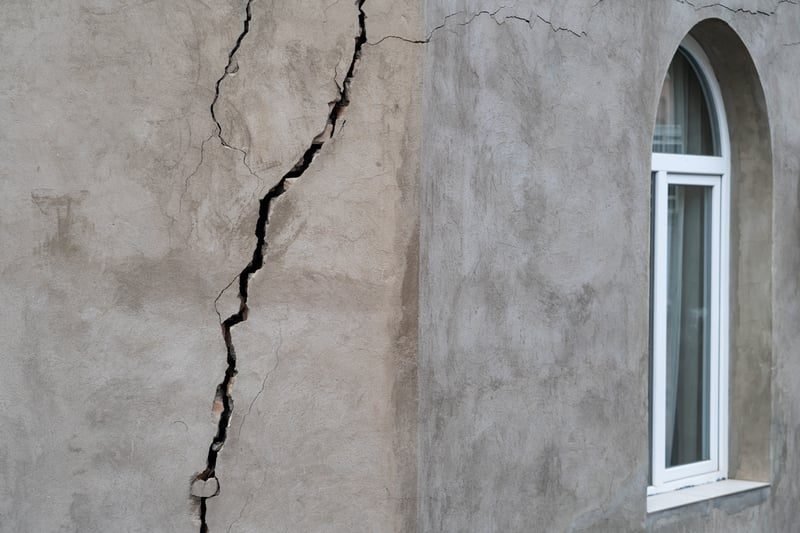
In construction law there is no single statutory definition of a “defect”. As a working definition, a defect is any aspect of the completed works that fails to comply with the contract — the specification, the drawings, an express performance requirement, or a term implied by law. That covers three broad failures: defective workmanship (the work was carried out badly), defective materials (the wrong or sub-standard products were used), and defective design (the thing was specified incorrectly in the first place).
The distinction matters because the legal standard differs. Workmanship and materials are usually judged against an absolute or near-absolute benchmark — the work either complies with the specification or it does not. Design, by contrast, is normally judged against the standard of reasonable skill and care, the negligence test borrowed from the law of professional services. A designer who exercises the competence of an ordinary skilled professional is not liable simply because the end result is imperfect, unless the contract imposes a stricter fitness-for-purpose obligation. A genuine defect is a departure from the contractual standard; a “snag” is the same thing identified at handover — the label changes nothing, it simply describes the timing.
Patent versus latent defects
English law draws a sharp line between two categories of defect, and the line drives the most important practical question in any claim: when did the clock start?
A patent defect is one that is apparent, or that would be revealed by a reasonable inspection at the relevant time — typically practical completion or handover. Cracked tiles, an out-of-square door, missing insulation visible in a loft: these are patent. Because they are discoverable, an employer is expected to identify and notify them during the defects period.
A latent defect is hidden. It is not discoverable on the kind of ordinary, reasonable examination a skilled person would carry out, and it manifests only after a period of time — a failing waterproof membrane, inadequate foundations, or fire-stopping that was never installed behind a finished wall. Latent defects are the dangerous ones, because by the time they reveal themselves the ordinary six-year contractual clock may already be running down, or the contractor may have left site years before.
| Feature | Patent defect | Latent defect |
|---|---|---|
| Discoverability | Apparent on reasonable inspection at completion | Hidden; emerges only later |
| Typical examples | Cracked finishes, poor decoration, visible misalignment | Defective foundations, failed membranes, missing fire-stopping |
| When usually found | At handover / during the rectification period | Months or years after completion |
| Contractual route | Notify during rectification / defects period | Breach-of-contract or negligence claim post-period |
| Limitation risk | Lower — identified early | High — may surface near or after the deadline |
The contractual basis of a defective works claim
Where a construction contract is silent on quality, section 13 of the Supply of Goods and Services Act 1982 implies a term that the contractor will carry out the work with reasonable care and skill; section 4 implies that materials supplied will be of satisfactory quality. A failure to meet either standard is a breach of contract that founds a defective works claim.
Almost every defective works claim is, at heart, a breach-of-contract claim. The first task is therefore always to identify the standard the contract actually imposed. There are three layers.
Express terms. The specification, drawings, employer’s requirements and any performance schedule set out exactly what was promised. If the contract said the roof would be laid to a particular fall and it was not, that is a straightforward breach — no need to argue about reasonable care.
Implied terms. Where the contract is silent, the law fills the gaps. Under the Supply of Goods and Services Act 1982, s.13, a supplier acting in the course of business must carry out the service with reasonable care and skill. For the supply of materials, the Act and the Sale of Goods Act imply terms of satisfactory quality and fitness for purpose — an absolute obligation that does not require proof of negligence.
The two competing design standards. The single most consequential question in many disputes is whether the contractor or designer owed a duty of reasonable skill and care or a duty of fitness for purpose.
| Reasonable skill and care | Fitness for purpose | |
|---|---|---|
| Nature of duty | Negligence-based: act as a competent professional would | Absolute: achieve the specified result, full stop |
| What the claimant proves | That the defendant fell below the standard of a reasonably competent practitioner | Only that the result was not achieved — no fault needed |
| Where it comes from | Default for design / professional services; SGSA 1982 s.13 | Express wording, design-and-build employer’s requirements, supply of goods |
| Insurance | Usually covered by professional indemnity policies | Often excluded from PI cover — a major risk |
| Standard form position | JCT and NEC generally limit designer liability to reasonable skill and care | Must be added deliberately by amendment |
This matters for two reasons. First, a fitness-for-purpose claim is far easier to win — you only have to show the building does not do what it was promised to do. Second, fitness-for-purpose obligations are frequently excluded from professional indemnity insurance, so a contractor who has accepted one may be liable but uninsured. Knowing which standard you are giving or receiving is one of the highest-value checks before signing.

Rectification and defects liability periods under JCT and NEC
Standard-form contracts do not leave defects to be sorted out by litigation. They build in a structured period during which the contractor has both the right and the obligation to return to site and put defects right. Understanding this mechanism is essential, because an employer who refuses to let the contractor back can lose the right to recover the cost of having someone else do the work.
JCT — the Rectification Period. Under JCT forms, the rectification period (historically called the “defects liability period”) begins at practical completion and runs for the length stated in the contract particulars — commonly 6 or 12 months, sometimes longer. Defects that appear during this period are listed in a schedule of defects, and the contractor must make them good within a reasonable time. Once the defects are remedied, the contract administrator issues a certificate of making good, which typically releases the second half of any retention.
NEC — the defects date and defect correction period. NEC uses different terminology and a different mechanism. The defects date is a single date, set in the Contract Data as a number of weeks after Completion (commonly 52 weeks). The defect correction period is the time the contractor has to correct a notified defect — counted from Completion for defects notified before Completion, and from the date of notification for defects found afterwards. The two are distinct: the defects date closes the window for notifying defects; the correction period sets how quickly each one must be fixed.
| Concept | JCT | NEC |
|---|---|---|
| Name of the period | Rectification Period | Defects date + defect correction period |
| Starts | At practical completion | Defects date: set weeks after Completion |
| Typical length | 6–12 months | 52 weeks (defects date); correction period in weeks |
| Contractor’s duty | Make good notified defects within a reasonable time | Correct each defect within the defect correction period |
| Completion marker | Certificate of making good | Defects Certificate at the defects date |
A crucial and widely misunderstood point: the expiry of the rectification or defects period does not extinguish the contractor’s liability. Under both JCT and NEC, the period provides a managed process for fixing defects as a precondition to final payment — it does not act as a contractual long-stop. A latent defect notified after the period has closed can still found a breach-of-contract claim, subject only to the ordinary limitation rules. The period is a right to cure, not an escape hatch.

The measure of damages: reinstatement versus diminution
The measure of damages is governed by Ruxley Electronics and Construction Ltd v Forsyth [1995] UKHL 8: where the cost of reinstatement is disproportionate to the benefit gained, the court may award the lower diminution in value, or damages for loss of amenity instead. In Ruxley the House of Lords awarded £2,500 for loss of amenity rather than the £21,560 cost of rebuilding a swimming pool that was only inches too shallow.
Where rectification by the contractor is not available — the period has expired, the relationship has broken down, or the contractor is insolvent — the claim becomes one for damages. The governing question is how much, and English law offers two competing measures.
The cost of reinstatement is what it would cost to put the works into the state they should have been in — to demolish and rebuild the defective element. The diminution in value is the difference between the value of the building as it should have been and its value as actually built. Often these are similar. Sometimes they are wildly different, and that is where the law has had to develop a rule.
The leading authority is Ruxley Electronics & Construction Ltd v Forsyth [1996] AC 344. Mr Forsyth contracted for a swimming pool with a diving area 7 feet 6 inches deep. It was built at 6 feet 9 inches. The pool was still perfectly safe and usable, and its market value was unaffected — so the diminution in value was nil. But rebuilding it to the contractual depth would have cost roughly £21,560. The House of Lords held that where the cost of reinstatement is wholly disproportionate to the benefit to be obtained, it would be unreasonable to award it. Instead, the court awarded £2,500 for “loss of amenity” — the loss of the pleasure of the deeper pool Mr Forsyth had bargained for.
The principle is therefore a reasonableness test: the cost of reinstatement is the normal measure, but a court will not award it where doing so is out of all proportion to the loss actually suffered. Two factors weigh heavily — the proportionality of the cost to the benefit, and the claimant’s genuine intention to carry out the remedial works. A claimant who has no intention of rebuilding and simply wants a windfall is unlikely to recover the full reinstatement cost.
Limitation periods: how long do you have?
Under the Limitation Act 1980, a claim for breach of a construction contract must generally be brought within six years of the breach, or twelve years where the contract was executed as a deed. Claims in negligence run for six years from the date the damage occurs, subject to the latent-damage rules.
A defective works claim is worthless if it is brought out of time. The Limitation Act 1980 sets the default deadlines, and they depend on how the contract was executed.
- Simple contract (signed under hand): 6 years from the date of breach.
- Contract executed as a deed: 12 years from the date of breach.
The critical phrase is “from the date of breach” — not from the date you discovered the problem. For latent defects this is harsh: the clock can expire before the defect even surfaces. Two routes mitigate this.
First, where there is a concurrent claim in the tort of negligence, the Latent Damage Act 1986 can give an alternative period of 3 years from the date of knowledge, subject to a 15-year long-stop from the negligent act. But this only helps if a negligence claim is available — many construction contracts exclude tortious liability through entire-agreement and exclusive-remedy clauses, in which case the Latent Damage Act does not assist.
Second, and far more significant for residential work, the Building Safety Act 2022 has dramatically extended the limitation period for claims under the Defective Premises Act 1972.
| Claim type | Limitation period | Runs from |
|---|---|---|
| Breach of simple contract | 6 years | Date of breach |
| Breach of contract under a deed | 12 years | Date of breach |
| Negligence (tort) | 6 years, or 3 from knowledge (15-year long-stop) | Damage / date of knowledge |
| Defective Premises Act 1972 — before 28 June 2022 | 30 years (retrospective) | Completion of the dwelling |
| Defective Premises Act 1972 — on/after 28 June 2022 | 15 years (prospective) | Completion of the dwelling |

The Building Safety Act 2022 regime
The Building Safety Act 2022 extended the limitation period for claims under section 1 of the Defective Premises Act 1972: from 28 June 2022, claims relating to dwellings completed before that date can be brought up to 30 years retrospectively, and 15 years prospectively for dwellings completed after it.
The Building Safety Act 2022 (BSA), the legislative response to the Grenfell Tower fire, transformed the landscape for residential defective works claims. Two features matter most for this guide.
Extended limitation under s.135. Section 135 of the BSA inserted a new s.4B into the Limitation Act 1980. For claims under section 1 of the Defective Premises Act 1972 — which imposes a duty that work in connection with the provision of a dwelling be done in a workmanlike or professional manner, with proper materials, so that the dwelling is fit for habitation — the limitation period is now 15 years for rights accruing on or after the commencement date of 28 June 2022, and a remarkable 30 years retrospectively for rights that accrued before that date. The Act expressly states that this amendment is “to be treated as always having been in force,” meaning claims long thought to be time-barred have been revived. The Court of Appeal has confirmed this retrospective effect operates as the words plainly require.
This is transformational: a flat owner whose building was completed in 2002 with defective external wall systems could, in principle, bring a DPA claim that would have been hopelessly out of time under the old six-year rule — provided the dwelling was unfit for habitation and the 30-year window remains open.
The higher-risk building regime. The BSA also created a new safety regime for higher-risk buildings — defined as buildings at least 18 metres tall or with at least 7 storeys, containing two or more residential units (and certain hospitals and care homes during design and construction). These buildings pass through a three-stage Gateway approval process overseen by the Building Safety Regulator, which sits within the Health and Safety Executive and whose new regime has been in full operation since 1 April 2024. For owners and developers of in-scope buildings, defects engage a statutory safety framework with its own duties and enforcement powers. The BSA also provides additional remedies — such as Building Liability Orders and Remediation Orders — that can reach beyond the original contracting party.
Worked example: a defective roof
Scenario. Northgate Developments engages Brackley Construction under a JCT Design and Build contract to build a commercial unit. Two years after practical completion — comfortably after the 12-month rectification period — the flat roof begins to leak badly. Investigation reveals the waterproof membrane was laid to the wrong falls and is failing across the whole roof: a latent defect.
The two figures. A roofing contractor quotes £180,000 to strip and re-lay the entire roof to the correct falls (the cost of reinstatement). A surveyor advises that, because the building remains lettable and the leak can be patched, the defect reduces the building’s market value by only £40,000 (the diminution in value).
Applying the law. Unlike Ruxley, this is not a cosmetic shortfall — a roof that leaks across its whole area is a functional failure that defeats the purpose of the building. Reinstatement is therefore unlikely to be “wholly disproportionate.” Northgate genuinely intends to carry out the works and has obtained a quote. On these facts a court would most probably award the £180,000 cost of reinstatement, not the £40,000 diminution, because rebuilding the roof is a reasonable response to a genuine defect.
Limitation. The JCT contract was executed as a deed, so Northgate has 12 years from the breach — the defect surfacing at year two leaves ample time. Had this been a residential building rendered unfit for habitation, the Defective Premises Act 1972’s 15-year period (post-28 June 2022) would also be in play.
The lesson is that the Ruxley proportionality test cuts both ways: the same arithmetic — a high reinstatement cost against a low diminution — produces opposite results depending on whether the defect is a trivial cosmetic deviation or a functional failure that undermines the building.

How to bring a defective works claim, step by step
- Identify and record the defect. Photograph it, date it, and get an independent expert (a building surveyor or relevant engineer) to confirm it is a departure from the contractual standard, not fair wear and tear.
- Find the contract standard. Pin down whether the relevant obligation is reasonable skill and care, good workmanship, or fitness for purpose. This decides how hard the claim is to prove.
- Check whether a cure period is still open. If you are within the JCT rectification or NEC defect correction period, notify the contractor and let them return — refusing can forfeit your remedy.
- Calculate both measures of damages. Obtain a reinstatement quote and a diminution-in-value assessment so you can argue the right measure under Ruxley.
- Check limitation immediately. Establish the execution method (hand or deed), the breach date, and whether a Defective Premises Act route extends your window.
- Map every potential defendant. Consider the main contractor, sub-contractors, and designers — and whether you hold a collateral warranty giving a direct route to a party further down the chain.
- Consider adjudication first. For most construction disputes, statutory adjudication offers a fast, interim-binding decision — often the most cost-effective first move before any Pre-Action Protocol correspondence.
Common mistakes in defective works claims
- Locking the contractor out. Refusing to let the contractor back to remedy defects during the rectification period, then claiming the (higher) cost of a third party — courts may limit you to what the original contractor would have charged.
- Assuming the defects period is a cut-off. Treating the end of the rectification period as the end of liability. It is not — latent defects survive it, subject to limitation.
- Claiming reinstatement reflexively. Demanding full rebuild costs for a trivial or cosmetic shortfall and being caught by the Ruxley proportionality test.
- Misreading the design standard. Assuming a fitness-for-purpose result when the contract only promised reasonable skill and care — or accepting a fitness-for-purpose obligation that your PI insurer will not cover.
- Missing the limitation clock. Forgetting that the period runs from breach, not discovery, and overlooking the Defective Premises Act 1972 extensions for residential work.
- Ignoring delay losses. Treating the defect in isolation and forgetting any liquidated damages or extension-of-time consequences that run alongside it.
What we see in practice
In our experience advising UK employers and contractors, the defective-works claims that succeed are built early, before the evidence disappears. The single most common error we see is the employer who, frustrated by shoddy work, instructs a third party to strip out and replace it before the original contractor has been given a documented opportunity to return and rectify — which both inflates the claim and hands the contractor a ready-made argument that the remedial cost was unreasonable under Ruxley. We also see parties anchor on the headline cost of reinstatement and overlook that the court will test proportionality: where a defect is largely cosmetic, diminution in value or loss of amenity may be all that is recoverable. The practical disciplines that change outcomes are dull but decisive: photograph and date the defects, keep the contemporaneous correspondence that shows the contractor was notified and given access, obtain an independent expert report on cause and cost, and check the limitation clock — particularly the extended Defective Premises Act windows — before assuming a claim is time-barred.
How Hayhills can help
Hayhills Legal Advisory supports clients across the full life-cycle of a defective works dispute. On the strategy side, we act directly: reviewing your JCT or NEC contract to pin down the workmanship, design and fitness-for-purpose standards; advising on the rectification or defect correction period and your right to require the contractor to return; modelling reinstatement versus diminution under Ruxley; and running the adjudication, negotiation and ADR strategy that resolves most construction disputes without court. We also map your limitation position, including the extended Defective Premises Act 1972 windows under the Building Safety Act 2022.
Where a claim needs to proceed to court litigation, formal enforcement, or a professional-negligence action against a designer, we advise on the case and introduce and coordinate a regulated solicitor to conduct it — so you keep one joined-up strategy throughout.
Facing defective works on a project? Talk to our construction advisory team about your contract, your remedies and your deadlines.
Call 0203 581 5789 or get in touch for a confidential review.
Frequently asked questions
What is a defective works claim?
It is a legal claim seeking rectification or compensation where construction work fails to meet the contractual standard — through poor workmanship, non-conforming materials, or defective design. The remedy is usually damages (cost of reinstatement or diminution in value) or an order requiring the contractor to put the defect right.
What is the difference between a patent and a latent defect?
A patent defect is apparent on reasonable inspection at completion, such as cracked finishes. A latent defect is hidden and emerges only later — for example failed waterproofing or missing fire-stopping. The distinction matters because latent defects can surface near or after the limitation deadline.
How long do I have to bring a defective works claim?
Generally 6 years from breach for a simple contract and 12 years if executed as a deed. For Defective Premises Act 1972 claims, the Building Safety Act 2022 extends this to 30 years retrospectively (rights accruing before 28 June 2022) and 15 years prospectively.
Can the contractor insist on returning to fix defects?
Usually yes during the JCT rectification or NEC defect correction period, when the contractor has both a right and a duty to remedy notified defects. Locking the contractor out and using a third party can limit your recovery to what the original contractor would have charged.
What does the rectification period actually do?
It provides a managed window — typically 6–12 months under JCT — for the contractor to make good notified defects as a precondition to final payment and retention release. Importantly, its expiry does not end the contractor’s liability for latent defects discovered later.
Will I get the cost of a full rebuild or just the drop in value?
The default measure is the cost of reinstatement. Under Ruxley v Forsyth [1996], a court awards only the diminution in value where reinstatement would be wholly disproportionate to the benefit. For functional failures that make a building unsafe or unusable, full reinstatement is normally recoverable.
What is the difference between reasonable skill and care and fitness for purpose?
Reasonable skill and care is a negligence standard — the defendant must act as a competent professional would. Fitness for purpose is absolute — the result must be achieved regardless of fault. Fitness-for-purpose duties are easier to prove but often excluded from professional indemnity insurance.
What is a higher-risk building under the Building Safety Act 2022?
A building at least 18 metres tall or with at least 7 storeys, containing two or more residential units (and certain hospitals and care homes during design and construction). These are subject to the Gateway approval regime overseen by the Building Safety Regulator within the HSE.
Does the Defective Premises Act 1972 apply to my claim?
It applies to work in connection with the provision of a dwelling that must be done in a workmanlike manner, with proper materials, so the dwelling is fit for habitation. It is most relevant to residential defects and benefits from the extended Building Safety Act limitation periods.
Should I adjudicate or go to court?
For most construction disputes, statutory adjudication is faster and cheaper and gives a decision binding on an interim basis. Hayhills runs adjudication and negotiation directly. Court litigation or professional-negligence claims against designers are matters on which we advise and introduce a regulated solicitor.
This article is for general information only and does not constitute legal or accountancy advice. Hayhills Limited, trading as Hayhills Legal Advisory, provides non-reserved legal advisory services. Always check current requirements at GOV.UK.